Airsoft Rules: Safety, Hit Calling and House Rules Explained

TL;DR
Airsoft rules come in two layers: a baseline of safety and fair-play conventions that almost every field shares, and house rules that each event adds on top. The baseline covers eye protection, muzzle velocity limits, minimum engagement distance and honest hit calling, enforced by marshals, while house rules like medic systems and dead rags vary by event.
Key takeaways
- ANSI Z87.1 eye protection is the minimum safe gear for most organised airsoft games.
- Fully automatic replicas are commonly capped under 400 feet per second with a 0.20 gram pellet.
- Most minimum engagement distances are set at 10 feet (3 meters).
- Hit calling runs on an honour system since BB hits leave no visible mark.
- Breaking a baseline safety rule typically means removal from the field; house rule breaches usually get a warning first.
On this page
Airsoft rules sit in two layers. There is a baseline of safety and fair-play conventions that nearly every field shares, and there is a set of house rules that each event or field adds on top of that baseline. If you searched “airsoft rules” because you are headed to your first game or writing a briefing for one, that order is the whole answer: get the baseline right first, then layer on whatever a specific event needs.
This guide covers:
- The baseline rules almost every field runs: eye protection, muzzle velocity limits, minimum engagement distance and honest hit calling.
- The house rules layer: medic systems, dead rags and whatever else a specific event adds on top.
- How a shared map changes enforcement on the day, and where ATAK or iTAK genuinely does more than TacSync can.
- A straight comparison of what each rule category costs you if you break it.
- Where to start if you are new to running or playing a game.
The baseline layer covers eye protection, muzzle velocity limits, minimum engagement distance and honest hit calling, enforced by marshals rather than left for players to police among themselves. ANSI Z87.1 eye protection, preferably a fully sealed and APEL-rated ballistic model, is the minimum safe level of gear to participate in most organised airsoft games.[1] That is the one rule with no exceptions worth taking. Everything else in this guide assumes you already have that part sorted. If you are brand new to the sport before any of this, What Is Airsoft? The Sport, the Gear, and How Games Work covers the basics this guide builds on.
The kinds of rules you’ll run into
Four categories cover almost everything you will run into at a game, whether you are reading the rulebook as a player or writing one as an organiser.
Muzzle velocity limits
Fully automatic airsoft replicas are commonly limited to under 120 m/s (400 feet per second), measured with a standard 0.20 gram pellet, with semi-automatic DMR-style guns allowed somewhat higher.[1] Close-quarters formats usually run a lower cap than open fields, since the engagement distance is shorter and the margin for a painful hit is smaller. Check the specific field’s limit before you turn up. A replica that passes chrono at one site can fail at another.
Minimum engagement distance
Most minimum engagement distances in organised airsoft are set at 10 feet (3 meters).[1] In practice that means a player carrying a high-powered or fully automatic replica is expected to switch to semi-auto, single shots, or hold fire entirely once an opponent closes inside that distance. It is built around the simple difference between a BB hit at range and one at point-blank, and it gets briefed at the start of every game for exactly that reason.
Hit calling and the honour system
Because airsoft pellets do not leave a visible mark, the sport relies on an honour system in which a player who is hit is expected to acknowledge it immediately.[1] There is no referee watching every player at once, and there is no welt to point to afterward. In most groups that means calling “hit” loudly, raising a hand, and holding up a bright dead rag until you reach a respawn point or the safe zone. None of that is written into any rulebook by law. It is a shared culture, and a new team should brief it out loud rather than assume everyone already knows the etiquette. If your team wants a quieter way to flag a hit without shouting across the field, Tactical Hand Signals for Airsoft and Milsim Teams covers the conventions players use for exactly that.
Face protection beyond the minimum
Masks, face shields and other full-face coverings such as balaclavas are recommended at most airsoft fields, on top of the baseline eye protection requirement.[1] Full-seal goggles cover the eyes. A mask or lower-face shield covers the mouth and teeth, which matters most in close-quarters formats where the engagement distance is already short. Plenty of players skip the extra coverage at an open-field skirmish and add it back for anything indoors.
Running it on a shared map
Rules are easier to enforce when everyone can see the same picture instead of only hearing it once at the briefing.
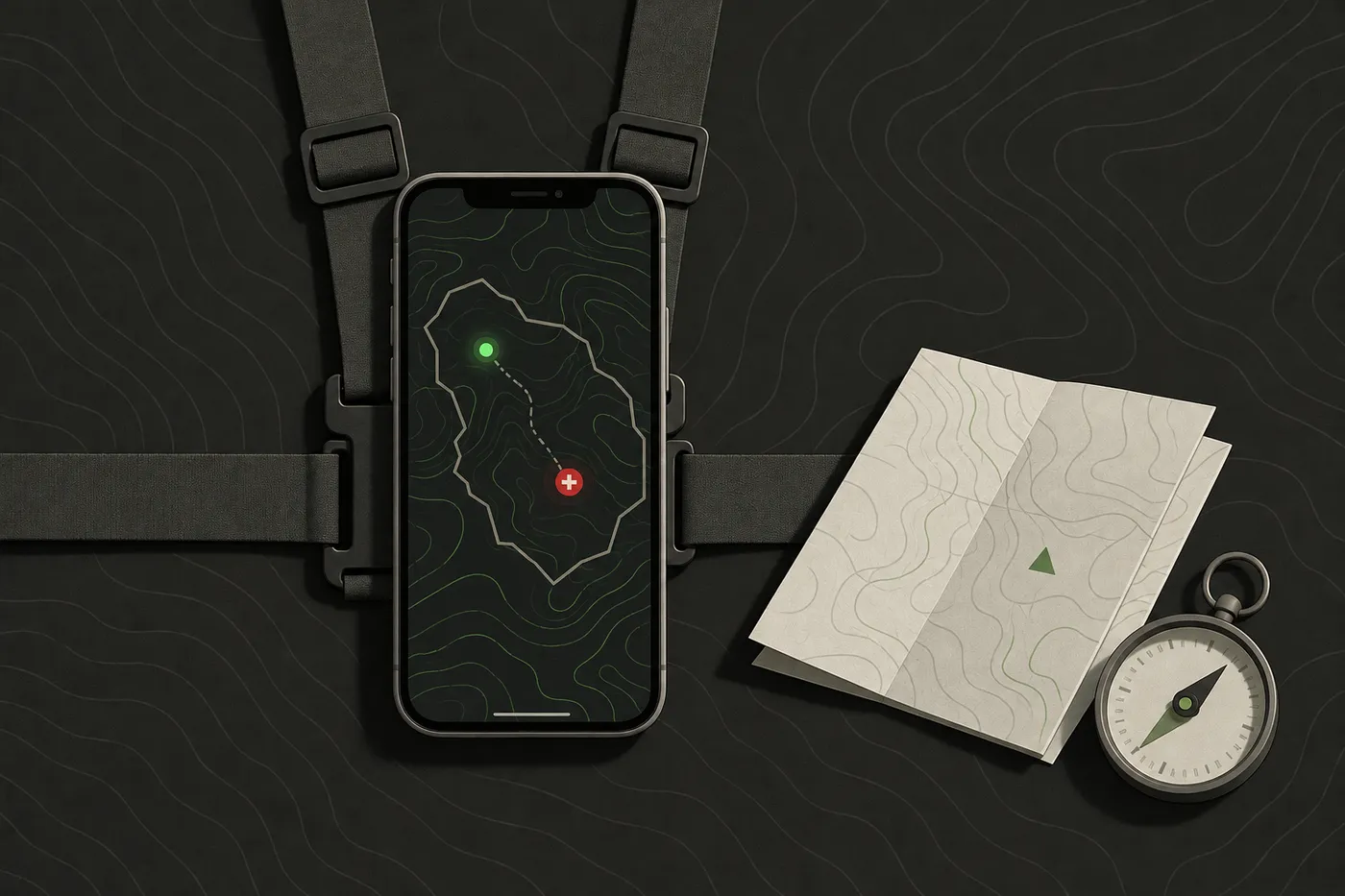
TacSync lets a player set an injured status and drop squad-coloured markers on the shared session map, so a medic or marshal can see who is down without a radio call for every hit.[1] Drawing a no-go zone or an out-of-bounds boundary directly on that map keeps the rule visible to every player for the whole game, long after the briefing is over and forgotten.
Bottom line: a shared map does not replace the rulebook. It just means fewer disputes come down to “nobody told me.”
If your event already runs on TAK infrastructure, this comparison looks different. ATAK and iTAK plugins such as DataSync and Execution Checklist require an organiser to already be running a TAK Server.[2] For an agency liaison or a large milsim operation that already has that server and people trained on it, ATAK or iTAK is the right tool, plugins included. TacSync is not a TAK client. An organiser can link a session to a TAK server as a beta feature, but chat and plugins do not carry across that link, so a team building its comms around a plugin ecosystem should pick ATAK or iTAK for that job.
Comparison
| Rule category | Governs | Who enforces it | Typical consequence |
|---|---|---|---|
| Eye and face protection | Gear worn before stepping on the field | Marshals, checked at the gate | Removal from the field until fixed |
| Muzzle velocity (chrono) | Maximum FPS a replica can shoot | Marshals, chrono station | Replica held back or capped down |
| Minimum engagement distance | How close you can fire at full power | Honour system, marshal intervenes on dispute | Warning, then removal for repeat breaches |
| Hit calling | Whether a hit is acknowledged | Honour system between players | Reputation; repeat offenders get called out or removed |
| House rules (medic, respawn, format) | Event-specific scoring and flow | Whoever wrote that event's rulebook | Usually a warning or an in-game reset first |
The baseline safety rules carry the highest consequence for breaking them, typically removal from the field, while house rules are usually enforced with a warning or a reset first. That gap is intentional. A blown chrono check risks someone’s eye. A missed respawn rule risks an argument.
If you are buying a replica in the UK rather than renting one at the field, there is a rule behind the counter too. Most UK airsoft sites and retailers take part in the United Kingdom Airsoft Retailer Association (UKARA) registration scheme, which supports the legal defence a retailer needs to sell certain replicas to a registered player.[1] It is a retail and legal mechanic rather than a game rule, but it explains why a new UK player sometimes gets asked for a registration number before a site will even discuss selling them a gun.
Practical tips
- Brief the chrono and eye protection check as the first thing that happens at the gate, before anyone has a reason to feel rushed past it.
- Post the minimum engagement distance and blind-fire policy at the safe zone in writing, in addition to the verbal briefing, so a dispute mid-game has something to point at.
- Treat the published rulebook as a floor you build above, never a ceiling. Tighten engagement distance and add a mandatory dead rag for close-quarters formats even if the base rules do not require it.
If you are building a full multi-day event rather than a single Sunday skirmish, How to organize a milsim event: a step-by-step checklist covers the parts that sit outside the rulebook itself.
Where to start
Start with the four baseline rules: eye protection, chrono and MED limits, and honest hit calling, before adding any house rule specific to a game format. Get those four right and most disputes disappear on their own.
A shared map with marked zones and visible injured status, such as TacSync’s, makes the baseline rules easier to enforce consistently without extra radio chatter. TacSync is free on the App Store and Google Play; an organiser running a bigger event gets a web command post at app.tacsync.com. The rules still have to be briefed. The map just means fewer of them get forgotten by the second objective.
Disclaimer: This guide is general information for airsoft, milsim and paintball games and for people learning about publicly available TAK software, not military, tactical or legal advice. Follow your field’s and event’s safety rules, marshal instructions and local law. ATAK, iTAK, WinTAK and TAK Server belong to their respective owners; TacSync is independent and not affiliated with the TAK Product Center. App features and prices change, so check the official listing before you rely on one.
Sources
Frequently asked questions
What eye protection do you need for airsoft?
ANSI Z87.1 eye protection, preferably a fully sealed and APEL rated ballistic model, is the minimum safe level of gear to participate in most organised airsoft games.
What is the minimum engagement distance in airsoft?
Most minimum engagement distances in organised airsoft are set at 10 feet (3 meters), inside which a player carrying a high powered or fully automatic replica is expected to switch to semi auto or hold fire.
How does hit calling work in airsoft?
Airsoft runs on an honour system because BB hits leave no visible mark, so a player who is hit is expected to acknowledge it immediately, usually by calling hit, raising a hand or holding up a dead rag.
Do you need a TAK server for airsoft?
Only if your event already runs on TAK infrastructure. ATAK and iTAK plugins such as DataSync and Execution Checklist require an organiser to already be running a TAK Server, while TacSync is not a TAK client and only links to a TAK server as a beta feature.
What is the maximum FPS for airsoft guns?
Fully automatic airsoft replicas are commonly limited to under 120 m/s (400 feet per second) measured with a standard 0.20 gram pellet, with semi automatic DMR style guns allowed somewhat higher.
TacSync
Put your whole team on one live map.
Positions, markers, routes and chat in a private session. Join with a QR code, no server to set up.