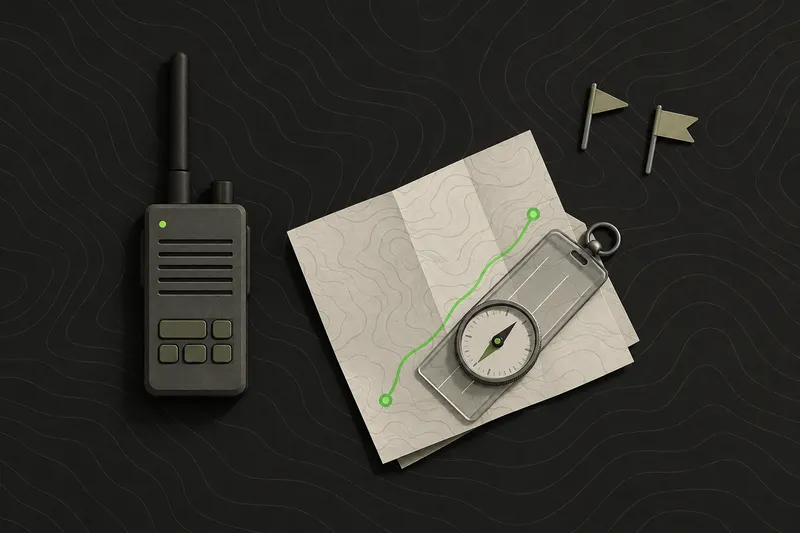
What Is Airsoft? The Sport, the Gear, and How Games Work

TL;DR
Airsoft is a shooting sport where players use realistic replica guns to tag each other with small plastic BBs instead of live rounds. A first game needs little more than a replica, rated eye protection and BBs, and the sport scales from a casual Saturday skirmish all the way up to multi-day milsim operations and the ATAK or TAK Server ecosystem that large agencies use.
Key takeaways
- Airsoft guns are spring-loaded, electric (AEG) or gas-powered, and originated in postwar Japan in the early 1970s.
- Airsoft pellets carry low muzzle energy, under 1.5 joules even in high-power replicas.
- Games run on an honor system, players call themselves out when hit rather than waiting for a referee.
- A replica, rated eye protection, BBs and clothes you don't mind getting dirty are enough for a first game.
- Large organized ops and agencies already on TAK infrastructure are better served by ATAK than by a simpler team map app.
On this page
Airsoft is a shooting sport where players use realistic replica guns to tag each other with small plastic pellets instead of live rounds. It isn’t paintball, and despite what the YouTube thumbnails suggest, it isn’t the military either, though military and police units do train with the same gear. Here is what a game involves, what you need for your first one, and when the tools built for real militaries, ATAK, iTAK, TAK Server, are worth your team’s time.
What Airsoft Is
Airsoft guns are classified according to their operating principle: spring-loaded, electric (battery-powered Automatic Electric Guns, or AEGs), or gas-powered.[1] An AEG cycles automatically off a rechargeable battery and a gearbox, which is why most players who stick with the hobby end up carrying one as their primary. Spring pistols and gas blowback sidearms, running green gas or CO2, fill in as backups and secondaries.
The sport traces back to postwar Japan, where it originated in the early 1970s.[1] Strict weapons laws meant hobbyists needed a way to shoot something that looked and handled like a real firearm without the legal weight of owning one, and airsoft filled that gap before spreading to the rest of the world.
What keeps it safe enough to play in a public park comes down to physics. Airsoft pellets carry low muzzle energy, under 1.5 joules even in high-power replicas, and a hit on bare skin causes about as much pain as a pinch.[1] That is still enough to do real damage to an unprotected eye, which is why eye protection is not optional at any field worth playing at.
What a Game Looks Like
A skirmish runs on an honor system. If you feel a BB hit, you call yourself out and walk to the staging area. Nobody is checking for welts, and nobody needs to. It’s a convention that holds a 200-person field together without a referee standing over every engagement.
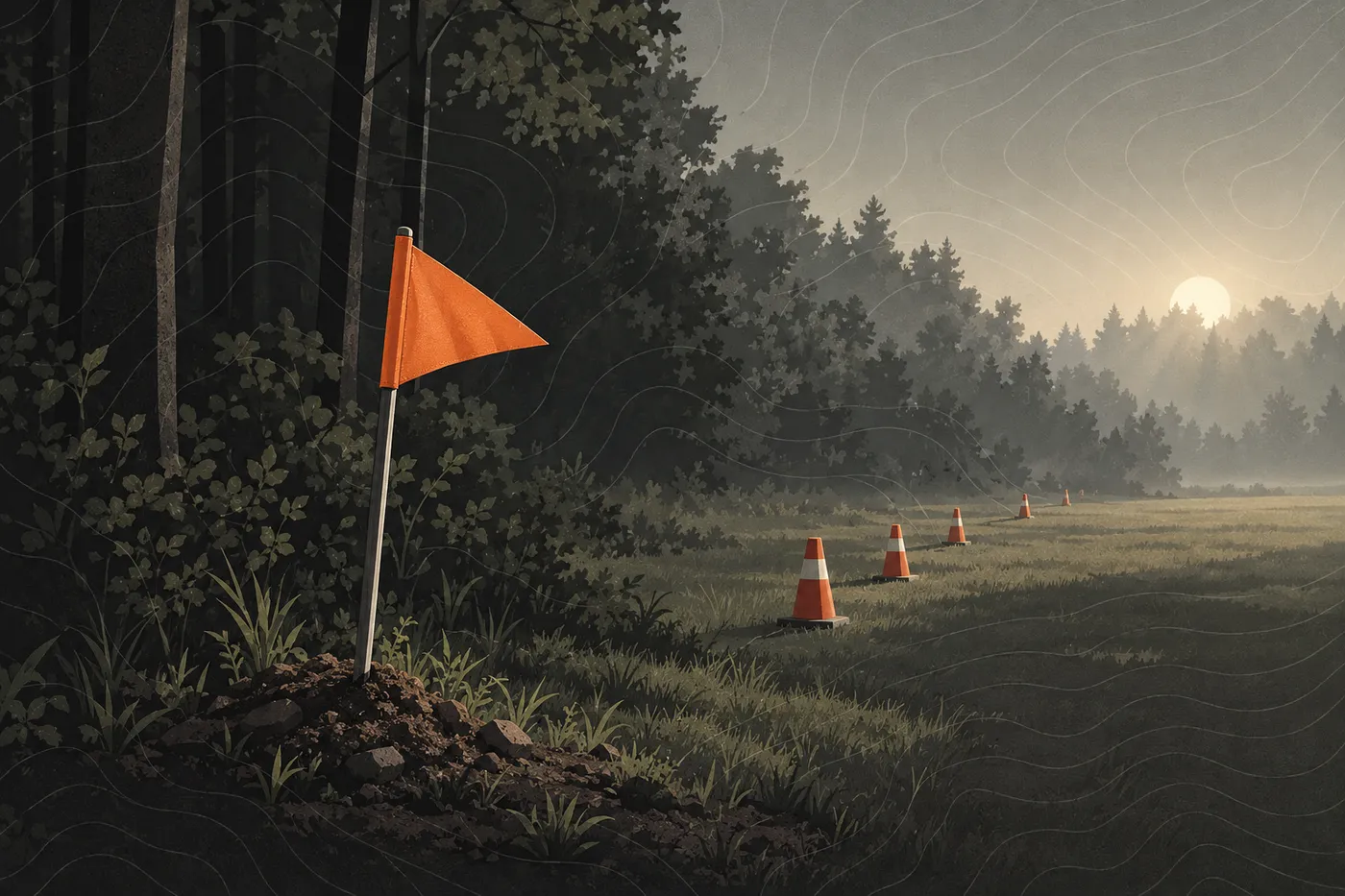
Formats vary enormously. A casual Saturday skirmish might be a dozen players rotating through capture-the-flag on one field for an afternoon. A milsim operation can run for a full weekend with scripted objectives, a command structure, and squads that do not see each other for hours at a time.
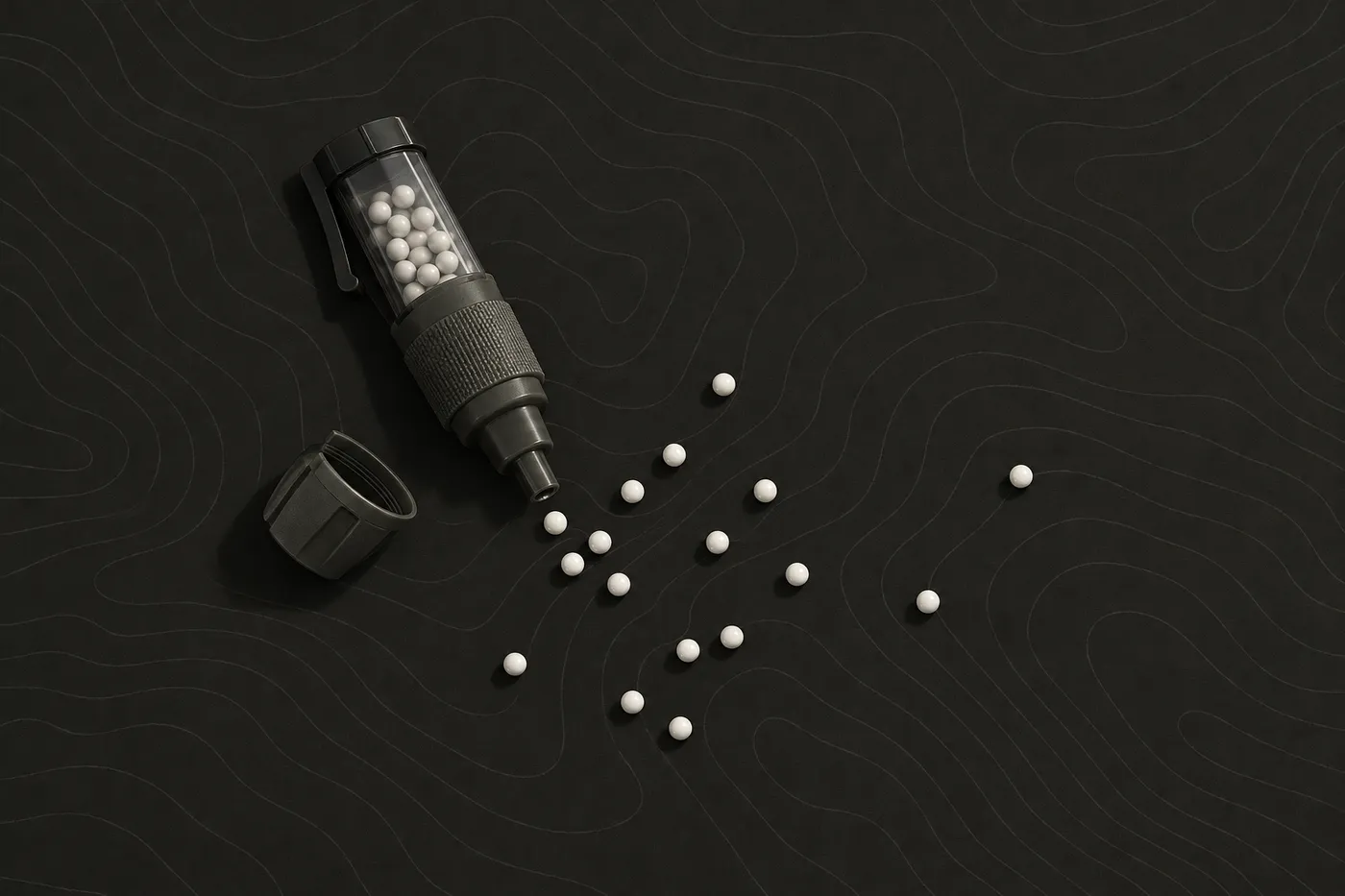
Standard BBs are small plastic pellets. The most popular weights, for AEGs and gas blowback guns, run 0.20 g to 0.32 g, though pellets are sold anywhere from 0.12 g to 0.48 g.[1] Heavier BBs resist wind drift better and hold accuracy at range, which is why players upgrade from the stock ammo in a starter pack once they start shooting past 30 meters.
Who Plays Airsoft and Why
Two groups keep the sport running:
- Hobbyists, who play it recreationally for the gear, the tactics and the Saturday skirmish.
- Military and law enforcement units, who use it for training. Airsoft’s realism, relatively safe projectiles and economical ammunition make it well suited to force-on-force training scenarios.[1]
Milsim, short for military simulation, sits at the serious end of the hobby. It’s a stricter style of airsoft that recreates realistic operations or historical battles with more structured objectives than a casual skirmish, and the people who play it tend to invest heavily in gear, planning and radio discipline. If that’s the itch you’re trying to scratch, What is milsim? A first-timer’s guide to military simulation airsoft is the fuller version of this answer.
What You Need to Get Started
Safety: rated eye protection is treated as a hard requirement at nearly every organized field. It’s a field norm rather than a law, but even a low-energy BB can cause a serious eye injury, and most fields enforce it strictly.
For a first game, you need less than the gear photos suggest:
- A replica. Rented or borrowed is fine for a first game; most fields have loaners.
- Eye protection rated for impact, the kind sold for airsoft or paintball, rather than hardware-store safety glasses.
- BBs in whatever weight your replica’s manual recommends.
- Clothes you don’t mind getting dirty. Fatigues help you blend in and survive brush, but nothing requires them.
That loadout, one replica, eye protection, BBs and clothes you don’t mind getting dirty, is enough to join a casual pickup game at most fields. Once you’re hooked, How to start an airsoft team: checklist, roles, radios and rules covers what changes once you’re running your own squad instead of just showing up to one.
Is Airsoft Right for You?
| Situation | What fits | Why |
|---|---|---|
| One-off backyard game with friends | Nerf or a similar toy | Costs less to try than a full airsoft loadout |
| Weekly skirmishes with a regular group | Airsoft, an AEG plus eye protection | Real tactics and gear without a big commitment |
| Weekend milsim op, one team, no server | A shared map app like TacSync | Everyone visible on one map, nothing to host |
| Large organized op or an agency already on TAK | ATAK, iTAK, TAK Server | Built for exactly this scale |
For a one-off backyard game among friends, something simpler than airsoft costs less to try and gets you most of the fun. Save the full loadout for when you know you’ll be back.
At the other end, TAK is built with the largest selection of features for real-time coordination between team members, delivered through mission-specific plugins, and it’s the USG’s premier shared situational-awareness tool for exactly that reason.[2] If your team already runs on TAK infrastructure, or you’re an agency that needs Cursor on Target interoperability and ATAK or iTAK plugins, ATAK is the right tool. Nothing built for airsoft alone replaces it, and nobody should pretend otherwise.
For a weekend airsoft or milsim team that just wants everyone visible on one shared map without running a server, a lighter tool like TacSync covers most of what a squad needs: live positions, markers, routes and chat, joined with a QR code instead of a server address. It isn’t a TAK client and doesn’t claim to be; an organizer can link a session to a TAK server as a beta feature, but the app’s job is running your game rather than standing in for ATAK. If you’re weighing the two directly, ATAK alternative for airsoft: TacSync vs ATAK, compared fairly lays out the tradeoffs.
Where to Go Next
Bottom line: airsoft is a gear-and-tactics hobby that borrows its vocabulary from the military without doubling as training for it. Start small, protect your eyes, and let the format grow with your interest.
Wikipedia’s airsoft article and the TAK Product Center are solid starting points if you want more history on the sport or more detail on the TAK ecosystem that sits next to it. And if your next question is about keeping a squad coordinated once the BBs start flying, Tactical Hand Signals for Airsoft and Milsim Teams is the natural next read.
Disclaimer: This guide is general information for airsoft, milsim and paintball games and for people learning about publicly available TAK software, not military, tactical or legal advice. Follow your field’s and event’s safety rules, marshal instructions and local law. ATAK, iTAK, WinTAK and TAK Server belong to their respective owners; TacSync is independent and not affiliated with the TAK Product Center. App features and prices change, so check the official listing before you rely on one.
Sources
- Airsoft. Wikipedia, accessed Oct 16, 2026.
- TAK Product Center. tak.gov, accessed Oct 16, 2026.
Frequently asked questions
What is airsoft?
Airsoft is a shooting sport where players use realistic replica guns that fire small plastic pellets instead of live rounds, in games ranging from casual skirmishes to multi-day milsim operations.
Is airsoft the same as paintball?
No. Airsoft uses replica firearms and small plastic BBs instead of paint-filled balls, and games typically run on an honor system where players call themselves out when hit.
What do you need to start playing airsoft?
A replica, rated eye protection, BBs in the weight your replica's manual recommends, and clothes you don't mind getting dirty are enough to join a casual pickup game at most fields.
What does milsim mean?
Milsim, short for military simulation, is a stricter style of airsoft that recreates realistic operations or historical battles with more structured objectives than a casual skirmish.
Do you need ATAK or TAK Server to play airsoft?
No. ATAK and TAK Server fit large organized operations or agencies already on TAK infrastructure. A weekend airsoft or milsim team that just wants everyone visible on one shared map can use a lighter tool instead.
TacSync
Put your whole team on one live map.
Positions, markers, routes and chat in a private session. Join with a QR code, no server to set up.